 Image 1 of 5
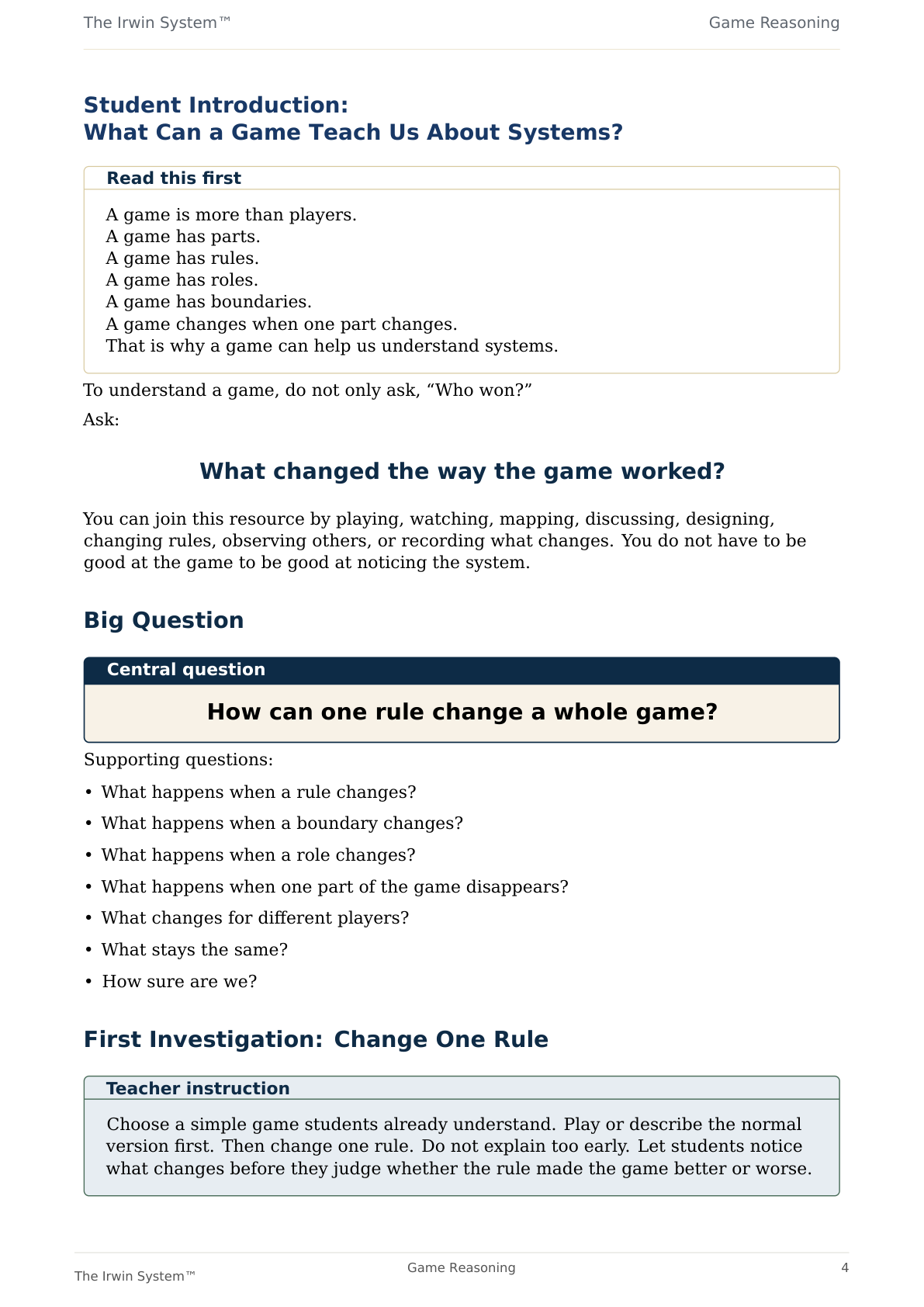 Image 2 of 5
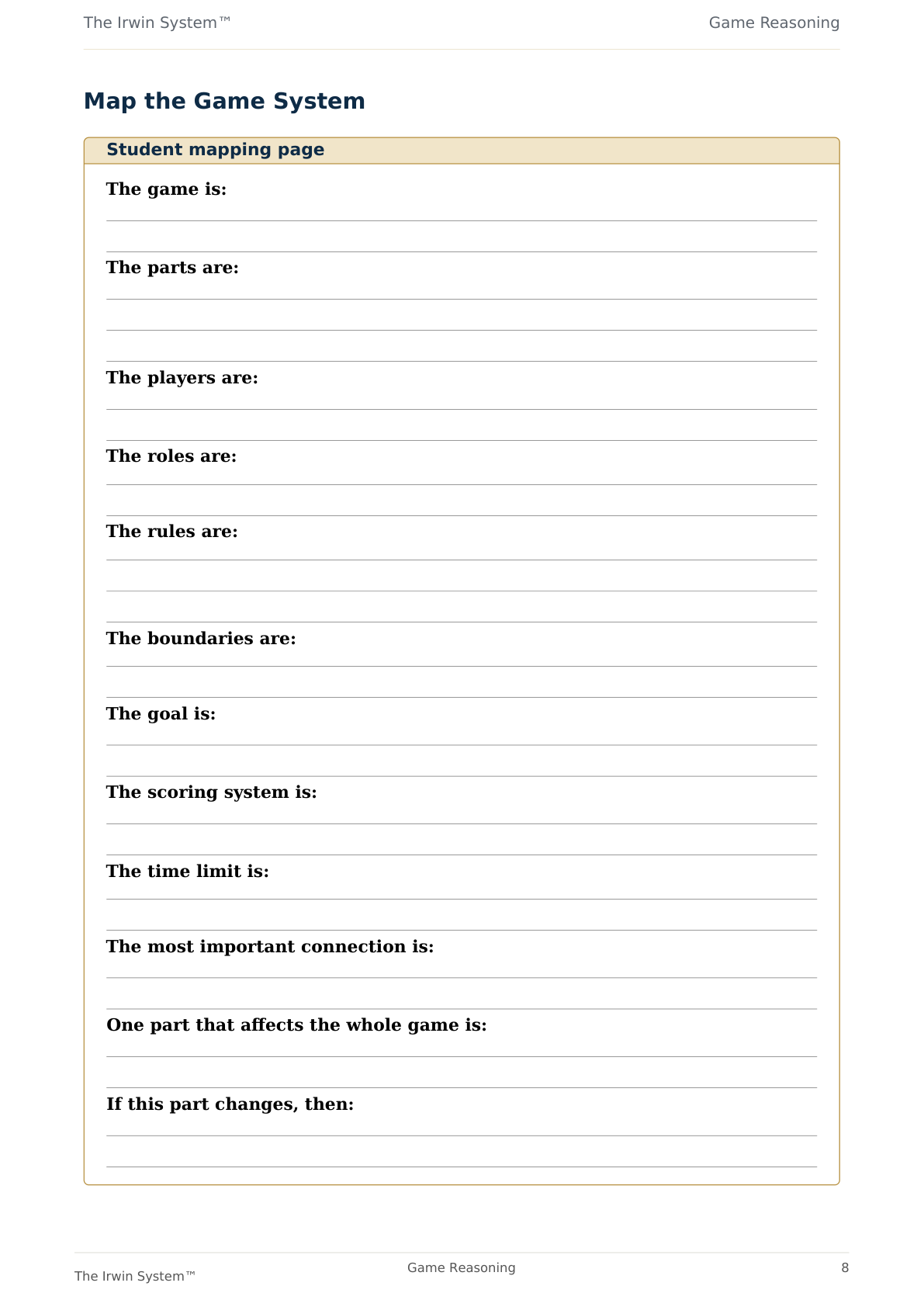 Image 3 of 5
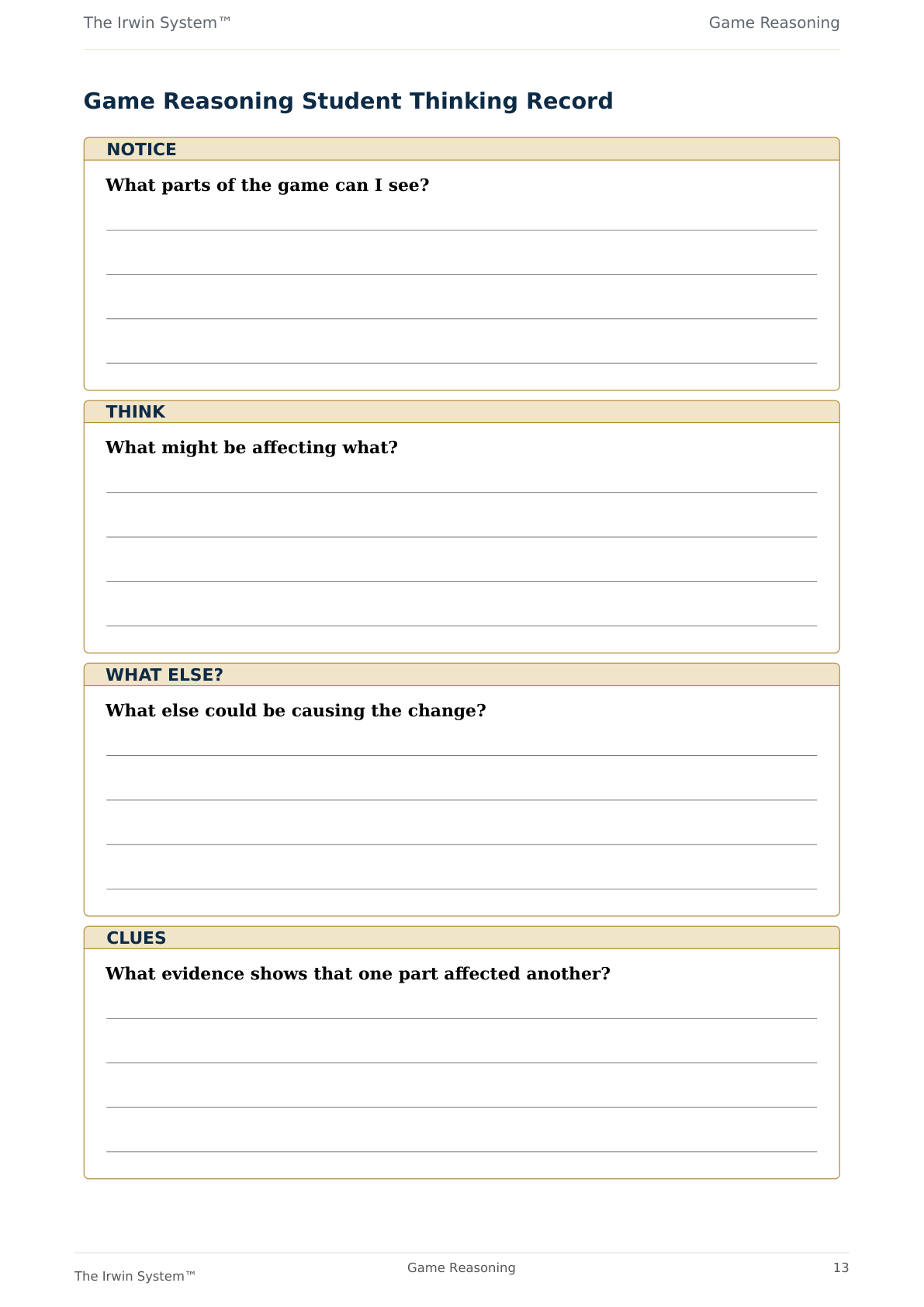 Image 4 of 5
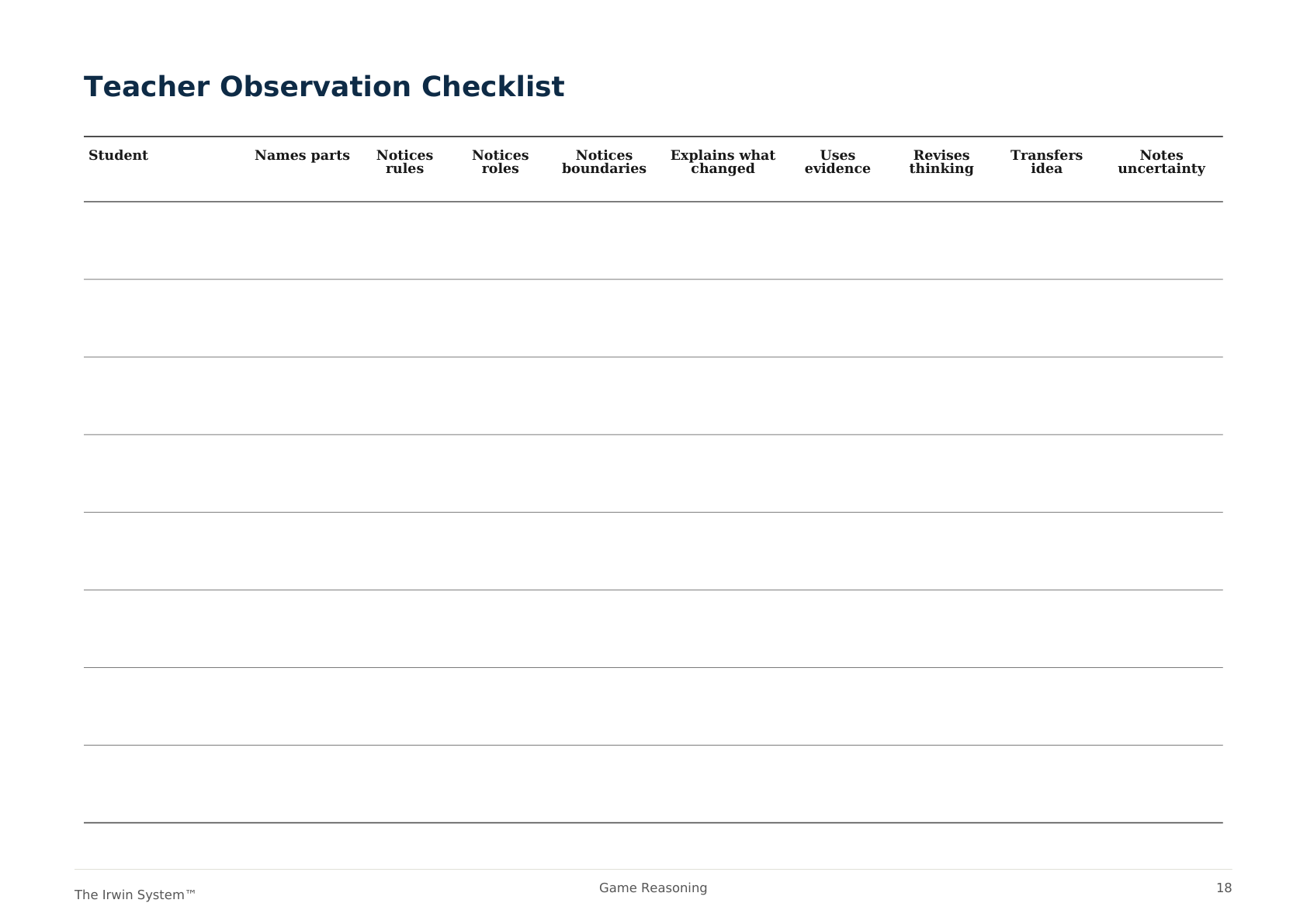 Image 5 of 5
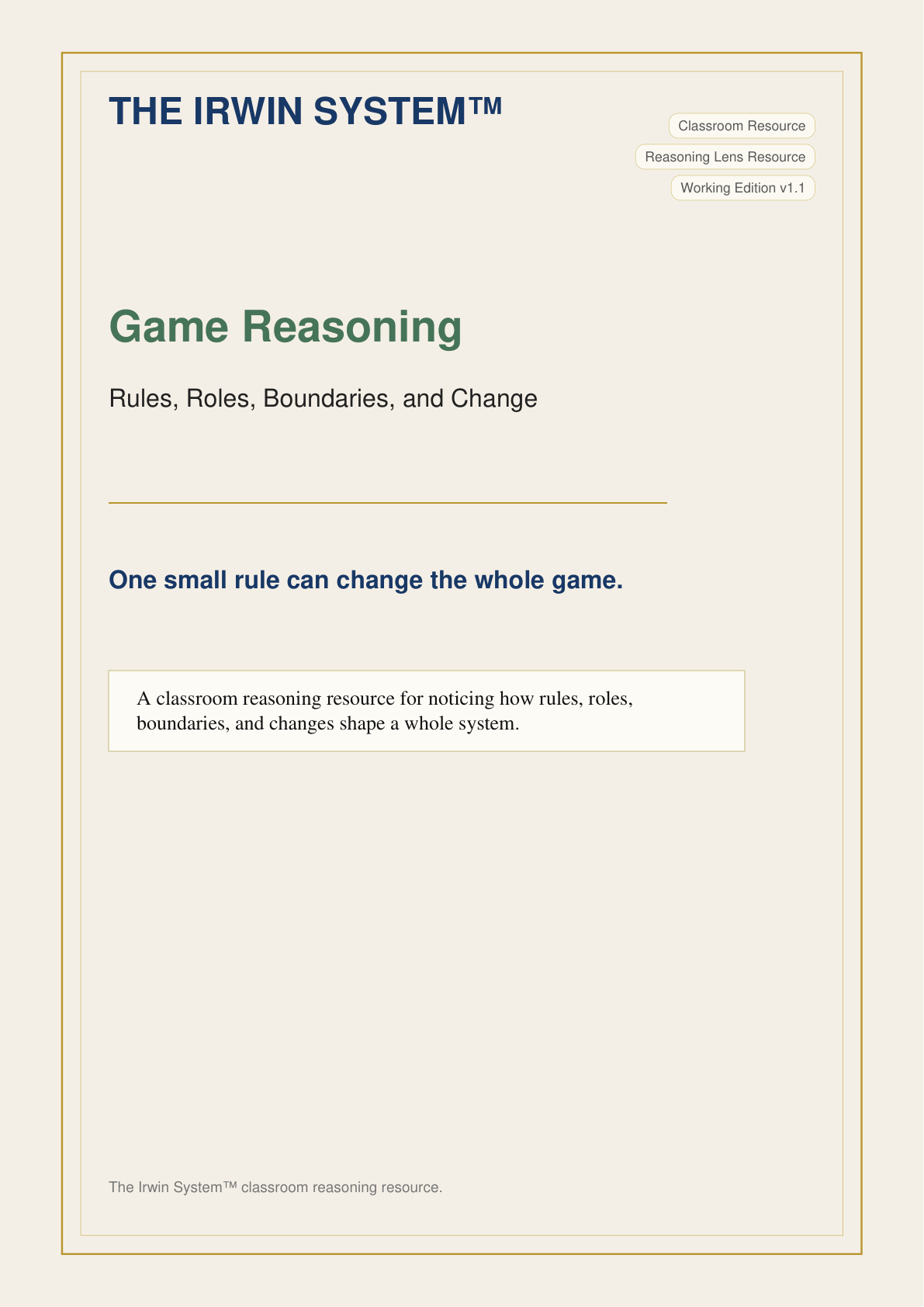
One small rule can change the whole game.
Game Reasoning is a classroom-ready systems reasoning resource that helps students notice how rules, roles, boundaries, goals, scores, time limits, equipment, and communication shape what a system can do.
Students begin with a familiar game, identify its parts and relationships, then change one rule or feature and track what changes first, who or what is affected, what stays the same, and what evidence supports their explanation.
This is not a PE skills lesson or a lesson about winning. The game is the visible system. The learning is in noticing what affects what.
CENTRAL QUESTION
How can one rule change a whole game?
THE IRWIN PATHWAY
NOTICE → THINK → WHAT ELSE? → CLUES → HOW SURE? → LEARN → NOTICE AGAIN
WHAT IS INCLUDED
• 22-page printable classroom resource
• Teacher introduction and facilitation guidance
• Student introduction and first investigation
• Possible games and rule-change prompts
• Opening questions and guided examples
• System-mapping page and simple system diagram
• System Roles in Games reference
• Design One Change group activity
• Two-page student thinking record
• Teacher notes and evidence-capture guidance
• Teacher observation checklist
• Exit tickets and extension questions
• Whole-class synthesis task
• Classroom-ready use notes
• Individual Educator Licence notice
• Full Resource Licence Terms
• Secure digital ZIP download
SUGGESTED CLASSROOM USE
Use Game Reasoning as:
• a single 45–60 minute lesson
• a two-lesson testing and redesign sequence
• a practical introduction to constraints, roles, boundaries, and system change
• a bridge between What Is a System? and Kitchen Reasoning
Suggested for Years 5–10 and adaptable for younger learners through supported discussion or older learners through deeper analysis and transfer.
EDITION AND LICENCE
Reasoning Lens Resource · Working Edition v1.1
This edition is licensed to one named educator for use with classes, groups, and learners they personally teach, supervise, or directly support.
The source PDF and ZIP may not be shared with colleagues, placed on a staff-wide shared drive, posted publicly, resold, or used for paid third-party professional learning without written permission.
For use by multiple educators within one school or kura, a Single-School Licence is required.
One small rule can change the whole game.
Game Reasoning is a classroom-ready systems reasoning resource that helps students notice how rules, roles, boundaries, goals, scores, time limits, equipment, and communication shape what a system can do.
Students begin with a familiar game, identify its parts and relationships, then change one rule or feature and track what changes first, who or what is affected, what stays the same, and what evidence supports their explanation.
This is not a PE skills lesson or a lesson about winning. The game is the visible system. The learning is in noticing what affects what.
CENTRAL QUESTION
How can one rule change a whole game?
THE IRWIN PATHWAY
NOTICE → THINK → WHAT ELSE? → CLUES → HOW SURE? → LEARN → NOTICE AGAIN
WHAT IS INCLUDED
• 22-page printable classroom resource
• Teacher introduction and facilitation guidance
• Student introduction and first investigation
• Possible games and rule-change prompts
• Opening questions and guided examples
• System-mapping page and simple system diagram
• System Roles in Games reference
• Design One Change group activity
• Two-page student thinking record
• Teacher notes and evidence-capture guidance
• Teacher observation checklist
• Exit tickets and extension questions
• Whole-class synthesis task
• Classroom-ready use notes
• Individual Educator Licence notice
• Full Resource Licence Terms
• Secure digital ZIP download
SUGGESTED CLASSROOM USE
Use Game Reasoning as:
• a single 45–60 minute lesson
• a two-lesson testing and redesign sequence
• a practical introduction to constraints, roles, boundaries, and system change
• a bridge between What Is a System? and Kitchen Reasoning
Suggested for Years 5–10 and adaptable for younger learners through supported discussion or older learners through deeper analysis and transfer.
EDITION AND LICENCE
Reasoning Lens Resource · Working Edition v1.1
This edition is licensed to one named educator for use with classes, groups, and learners they personally teach, supervise, or directly support.
The source PDF and ZIP may not be shared with colleagues, placed on a staff-wide shared drive, posted publicly, resold, or used for paid third-party professional learning without written permission.
For use by multiple educators within one school or kura, a Single-School Licence is required.