TEACHER? START HERE
Start with one encounter.
Try one encounter. Use one or two prompts. Notice what becomes visible. Return if useful.
Three prompts are enough to begin.
What did you notice?
What makes you think that?
What else might be happening?
What might become visible?
a new detail;
another possible explanation;
a change in confidence;
a need for more evidence;
uncertainty that remains.
Choose what you need next.
Try a classroom encounter
Start with one image, object, text or situation.
Record one classroom encounter
Keep a careful record of what became visible.
One encounter does not show everything a learner knows or can do. Record only what became visible here.
Begin lightly. Notice what happens.
See what reasoning evidence can look like.
The Irwin System™ does not assess the learner as a fixed type or ability.
It helps teachers notice what reasoning became visible in a particular encounter: what the learner observed, how an explanation was formed, whether another possibility was considered, how clues were used, how confidence was calibrated, and whether thinking changed.
From student response to teacher interpretation
A student response is the evidence.
The teacher’s interpretation is a careful professional judgement about what that response demonstrates. These are kept separate so an inference is not mistaken for an observation.
What progression may sound like
Progression is not based on giving the longest answer, using the most sophisticated vocabulary or sounding the most confident.
The descriptors help teachers notice changes in reasoning, such as distinguishing observation from explanation, generating plausible alternatives, comparing clues, calibrating confidence and explaining how thinking changed.
Growth across encounters
Growth is visible when reasoning changes.
A learner may begin with an immediate explanation and later distinguish observation from explanation, hold more than one possibility, compare clues or explain why certainty should remain limited.
Growth does not require every part of the pathway to move at the same rate.
Moderation protects the judgement
The progression rubric provides shared language, but it does not replace professional judgement.
Teachers return to the learner’s actual words or actions, compare them with the descriptors and discuss where the evidence fits. Length, vocabulary, confidence and correctness are not treated as substitutes for reasoning.
The record describes the encounter.
Observation notes record what became visible, the teacher’s interpretation and a possible next teaching step.
They do not diagnose, label or describe everything the learner knows or can do.
Begin with the free example
Begin with the free Teacher Starter Pack. Use one image, one short discussion and a small number of prompts to notice what becomes visible.
Download the free Teacher Starter Pack
Use the complete assessment collection
Explore the handbook, Pathway Progression Rubric, annotated student samples, baseline and growth examples, moderation exemplars, Teacher Observation Notes, Student Reasoning Journal and classroom posters.
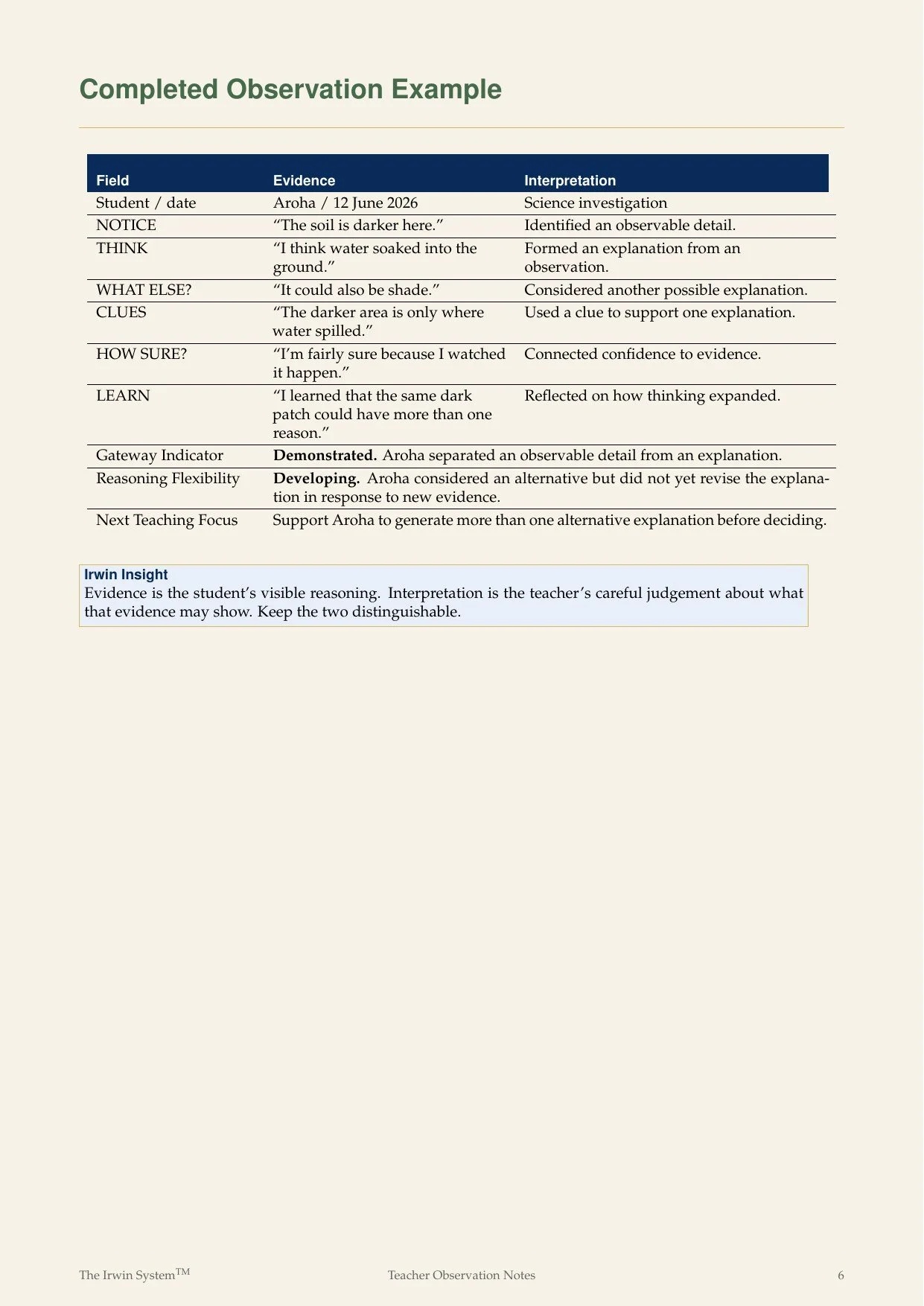
A completed record separates what became visible, the teacher’s interpretation and a possible next teaching step.
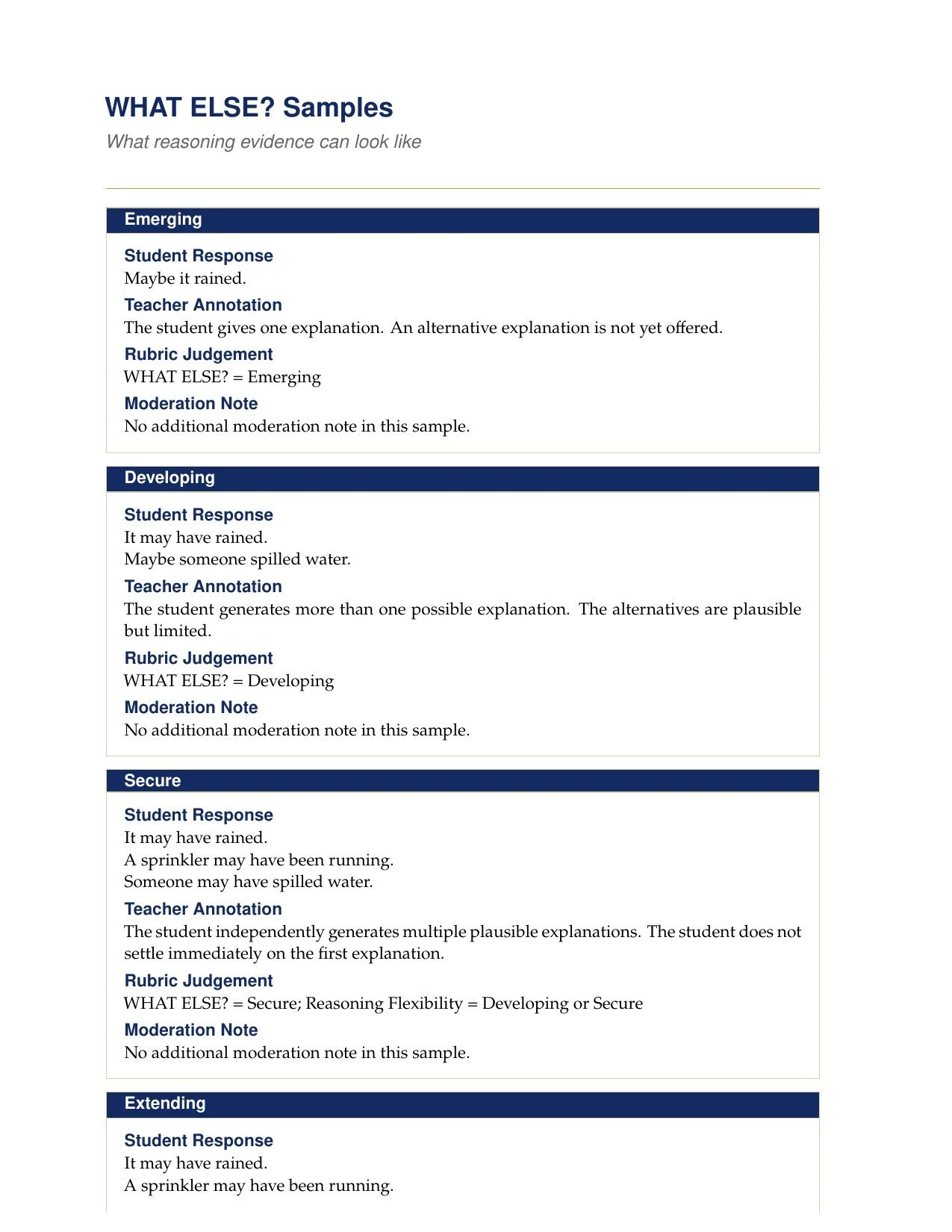
The learner’s response remains the evidence. Teacher annotations identify what that evidence may demonstrate.
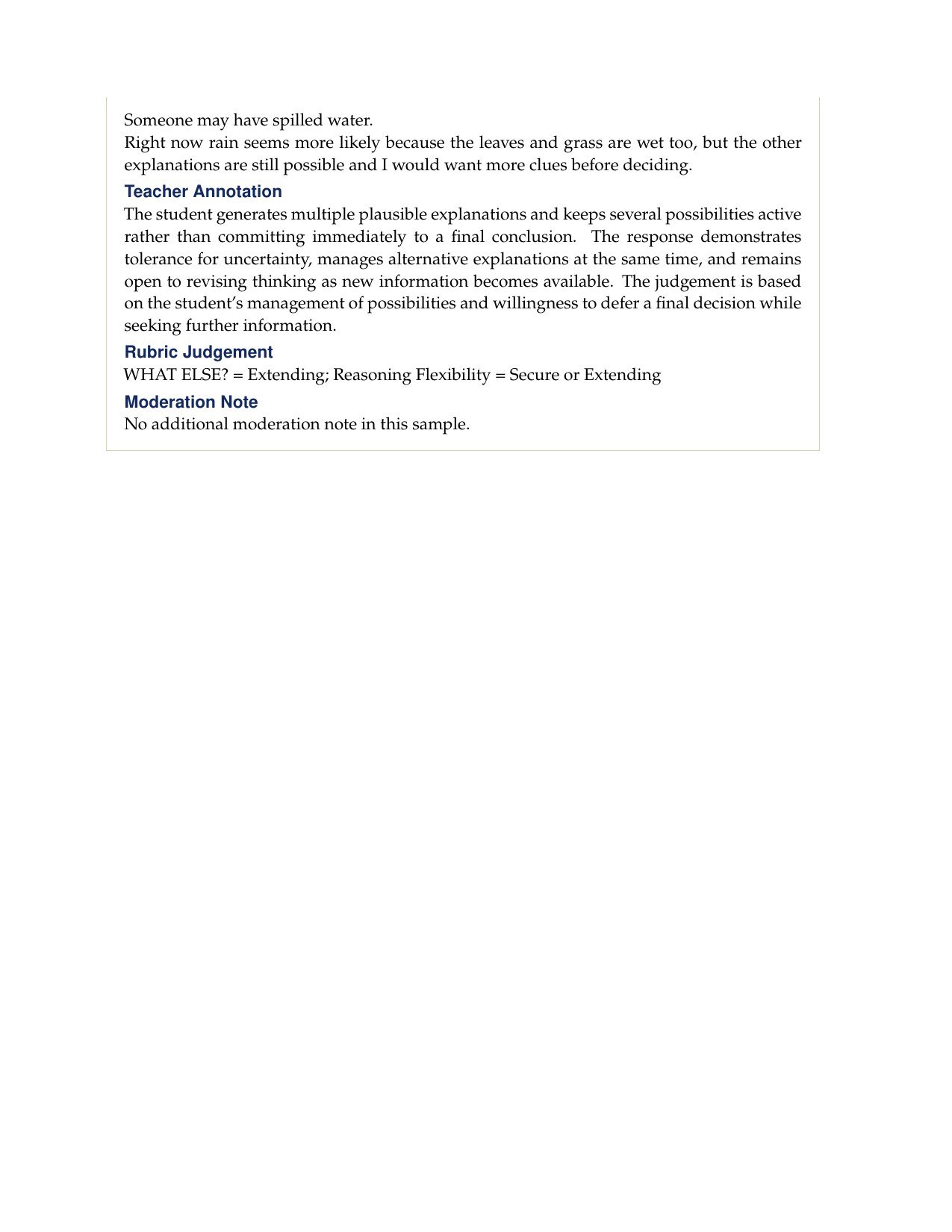
Progression is located in the reasoning made visible, not in answer length, vocabulary or confidence.
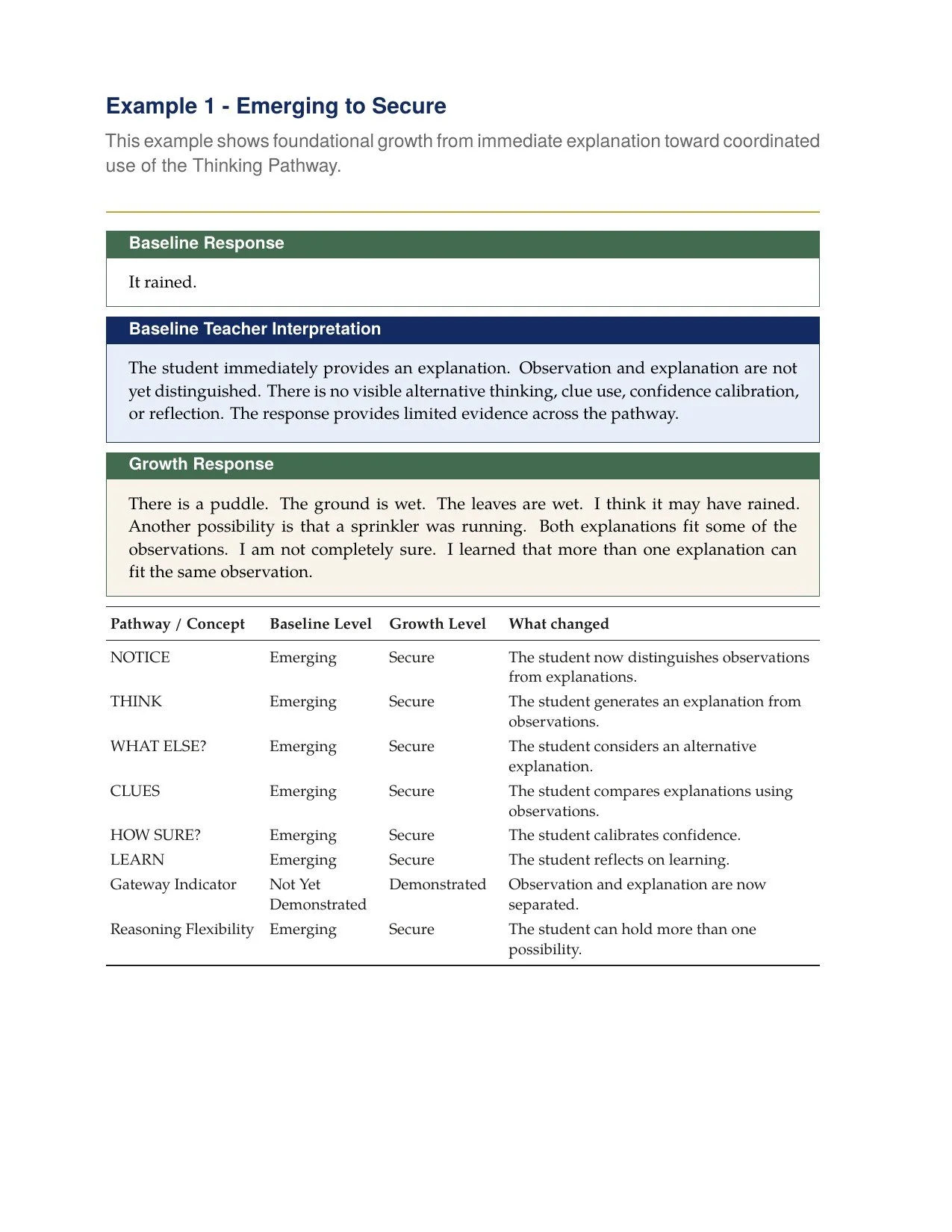
Two encounters can show a change in how a learner distinguishes observation, explanation and possibility.
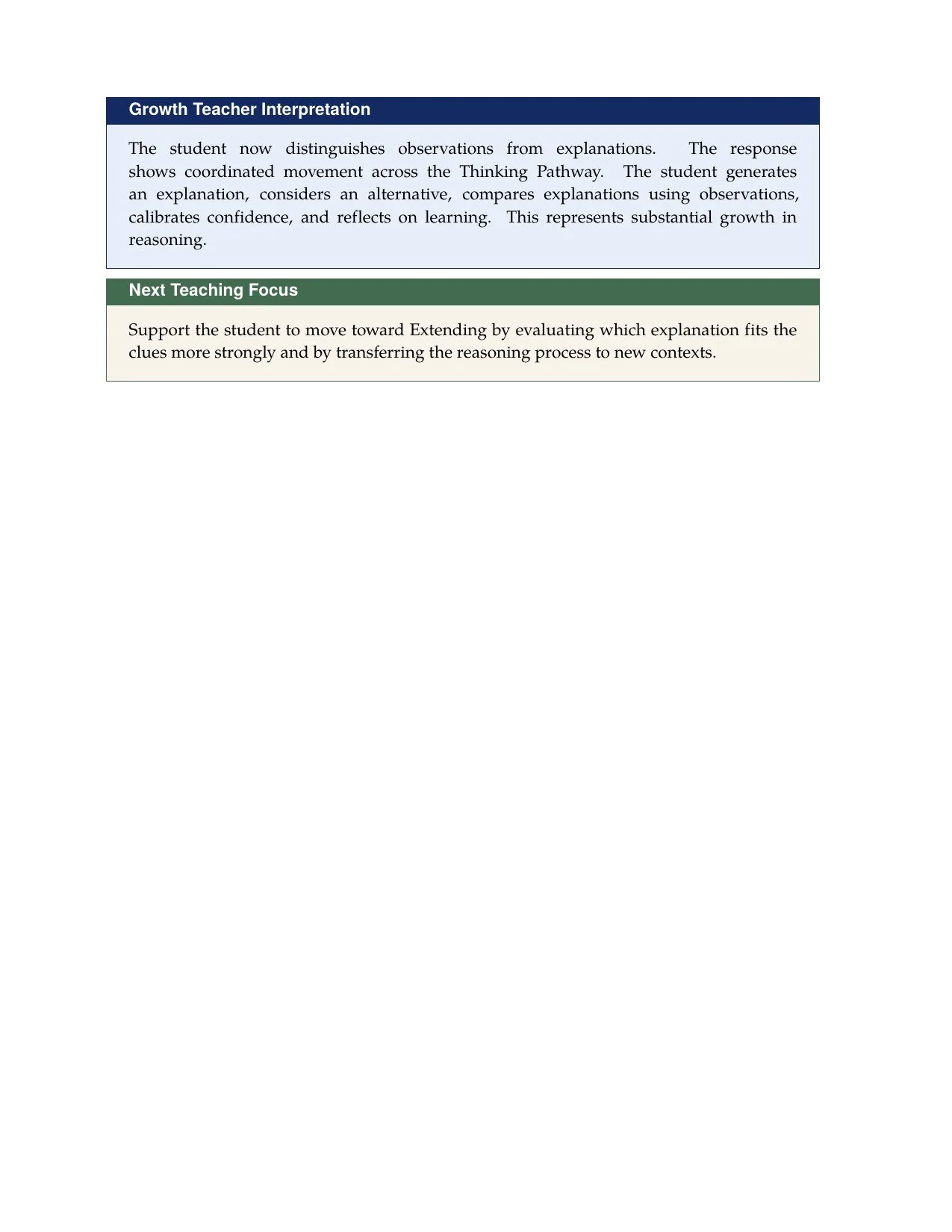
The interpretation describes the change supported by the evidence. It does not define the learner.
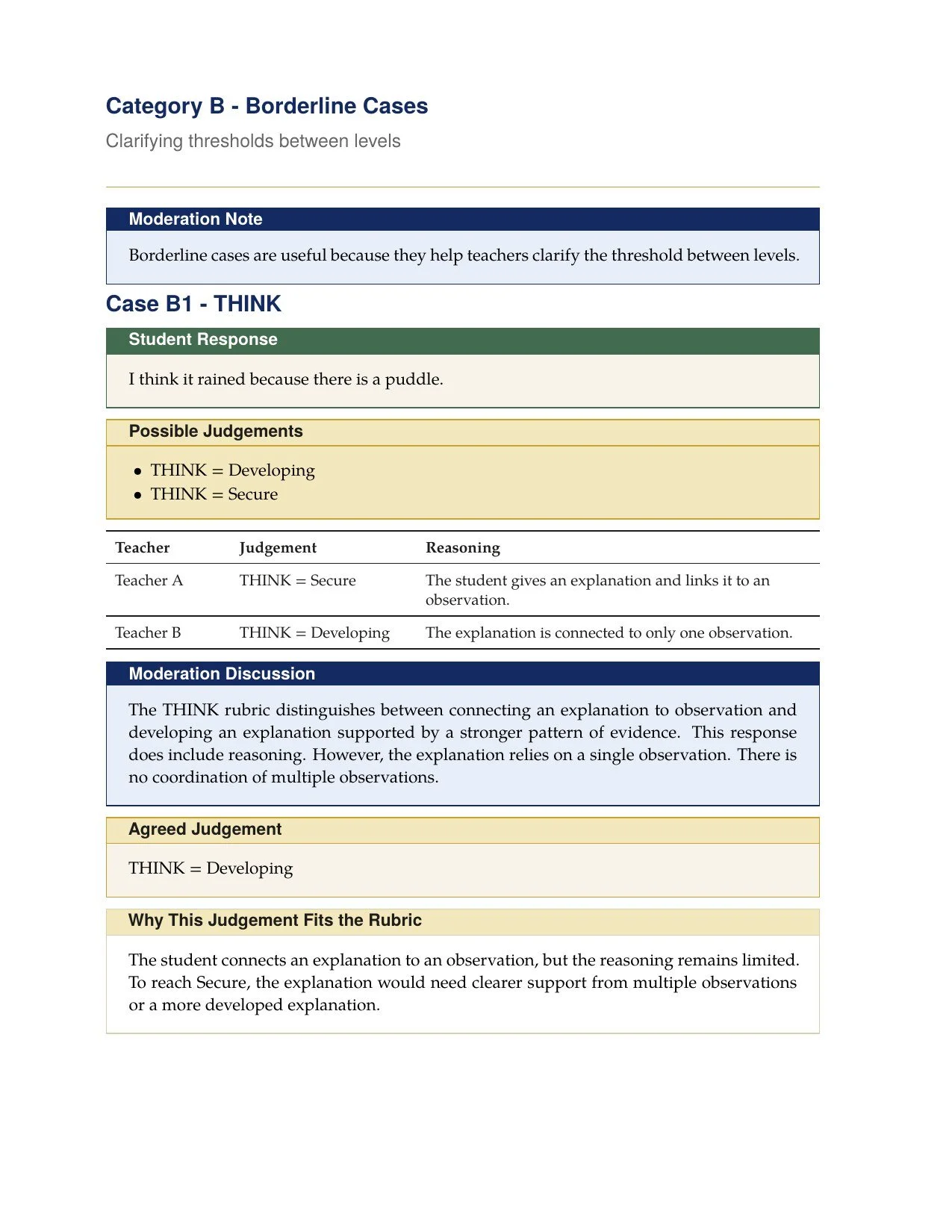
A borderline case invites teachers to return to the learner’s actual words before settling on a descriptor.
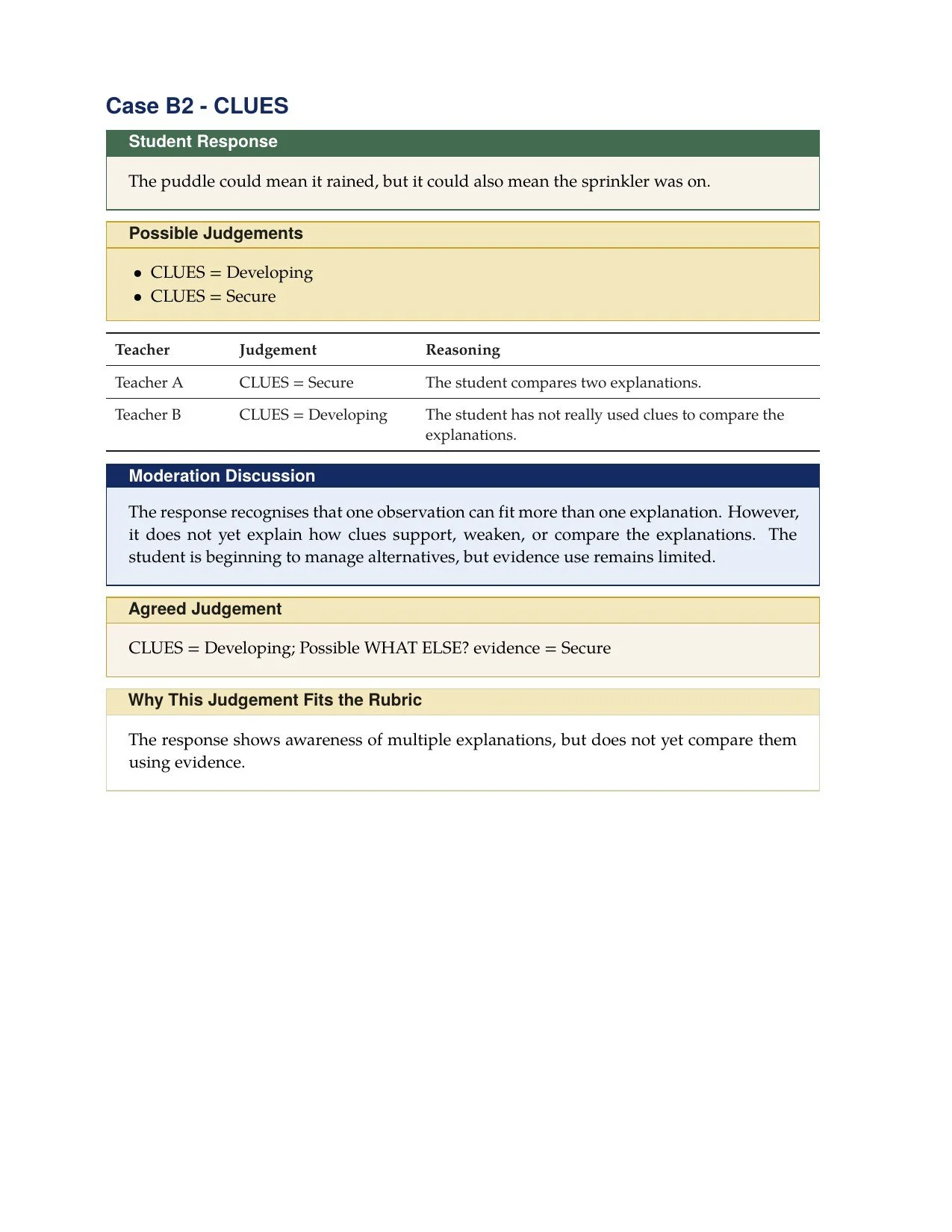
Shared judgement is strengthened when teachers identify the particular clues supporting an interpretation.
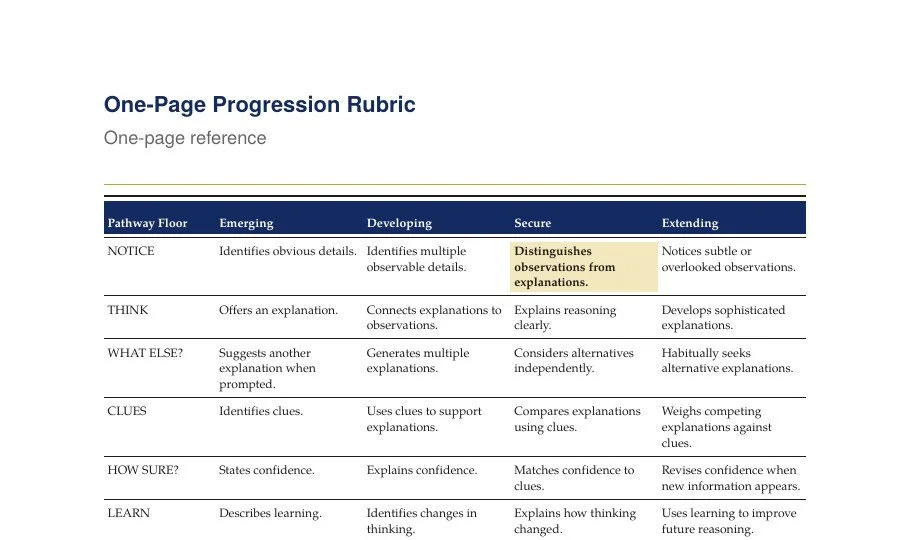
The rubric provides shared observational language. It does not grade or label the learner.